
Sowing advice & Soil types
Sowing Advice & Soil Types
When you sow organic grass seed, you are actually sowing much more than just plants. You are sowing biodiversity, balance, and resilience. And it all starts with understanding your soil. Every plot is unique: sandy soil, clay, loam, or something in between, each type requires its own approach and attention. Do you want a soil analysis and advice? Please contact our soil advisors.
The soil as a living organism
In a holistic system, we see the soil not as a passive substrate, but as a living system. Rich soil is airy, full of microlife, and contains a wide range of trace minerals. This microlife is essential: it helps plants absorb their nutrients, protects against diseases, and makes the whole resilient to fluctuations in climate and use.
Soil that has received artificial fertilizer or slurry for years is often out of balance. Too much nitrogen causes an excess of fast-growing production grasses and stifles the emergence of herbs and flowers. By allowing these soils to rest and enriching them naturally, we again create space for biodiversity.
Soil types and their needs
Sandy soil
Properties: Airy, permeable to water, low water retention capacity.
Challenges: Drought, leaching of nutrients, low humus.
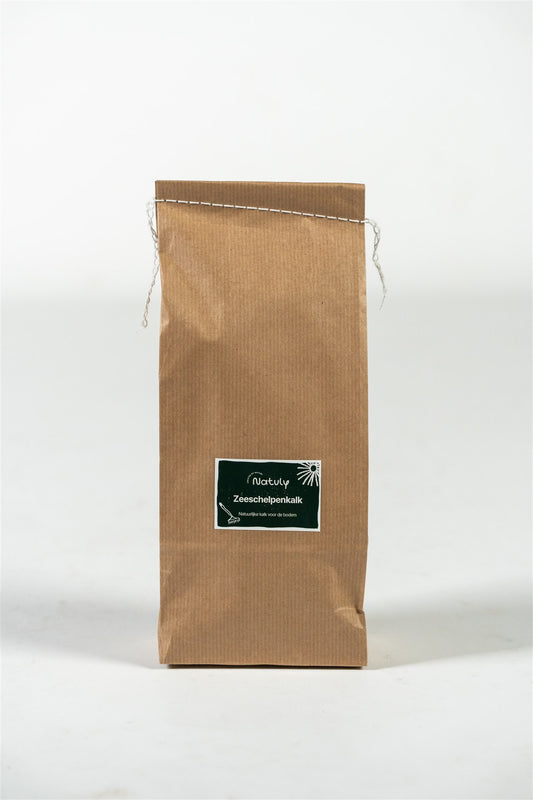
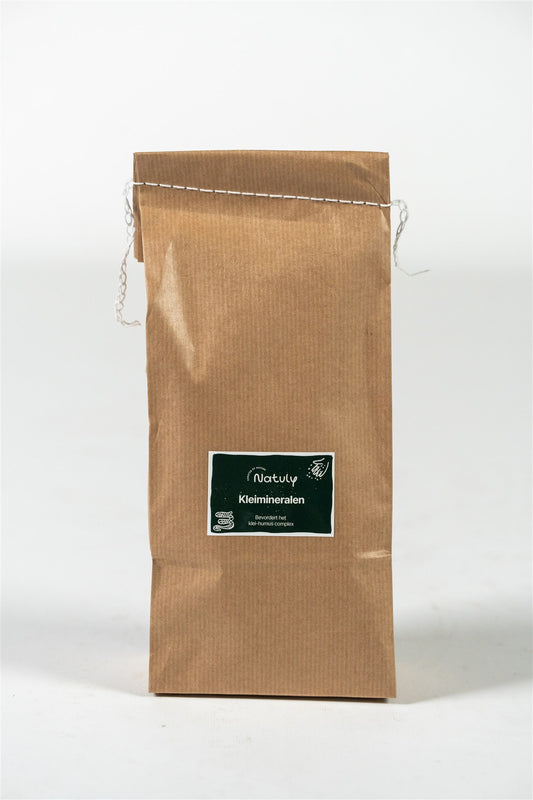
Advice: Add clay minerals to better retain moisture and minerals. Work with lava meal or lava grit for a good base of minerals and trace elements. Over the years, also apply Vulkamin and Actimin for greater diversity in minerals and trace elements. Compost is essential here for humus building. Add seashell lime as a natural source of lime against acidification. Choose grass seed mixture 1 as a base and mix with grass seed mixture 4 (for dry soils).
Clay and loam soil
Properties: Nutrient-rich, retains water well, heavy to work with.
Challenges: Poor aeration, waterlogging during wet periods.
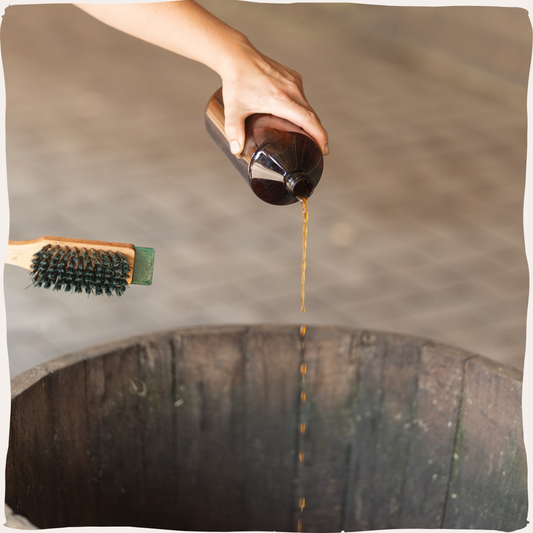
Advice: Improve structure by adding organic material (compost or bokashi), and prevent clogging. Rock dust also helps here to get microlife going well. Grass seed mixture 1 as a base mixed with mixture 3 is often a good choice here. Consider doing a pH test to determine the soil's acidity. If the soil is acidic, you can add seashell lime as a natural source of lime against acidification.
Normal soils or mixed soils
Properties: Balanced, easy to work with.
Advice: Ideal for building biodiversity. Choose grass seed mixture 1 as a base and combine it with mixture 3 or 4 for more diversity. Consider doing a pH test to determine the soil's acidity. If the soil is acidic, you can add seashell lime as a natural source of lime against acidification.
 Sowing: so simple, so decisive
Sowing is a natural process, but to get the most out of it, timing and preparation are essential.
When to sow?
- Grass seeds: from March to October, as long as the soil temperature is > 6°C.
- Herbs & flowers: preferably from April to September.
Please note: organic seed has a deeper dormancy and therefore emerges somewhat slower than conventional seed. This is normal! The development is calmer and deeper, ultimately leading to more robust and nutritious plants.
How to sow?
- New sowing: Loosen the top layer 10–20 cm deep, remove existing grass and weeds, mix the soil with compost and possibly soil improvers (rock dust, clay minerals, seashell lime).
- Overseeding: Sow on short, open grass. Ideally just after mowing or grazing. Lightly open the soil with a weeding harrow or harrow. Expect somewhat less germination with overseeding; repeat if necessary.
Dosage
- New sowing: 40–60 kg per hectare (4–6 kg per 1000 m²).
- Overseeding: 20–30 kg per hectare (2–3 kg per 1000 m²), possibly repeat after 1 year.
Practical tips for success
- Choose sunny spots for herbs and flowers, they love light and warmth.
- Think in strips or corners that can be set aside for recovery and overseeding.
- Use compost or bokashi to feed the soil. Do NOT use fresh manure.
- Use rock dust such as Eifel lava meal when sowing for a boost of minerals.
- Go for gradual change. With soil in transition, you can see much improvement after the first year, but true biodiversity requires several seasons.
Natuly used to be Bio-ron.

Forage
Soil
-
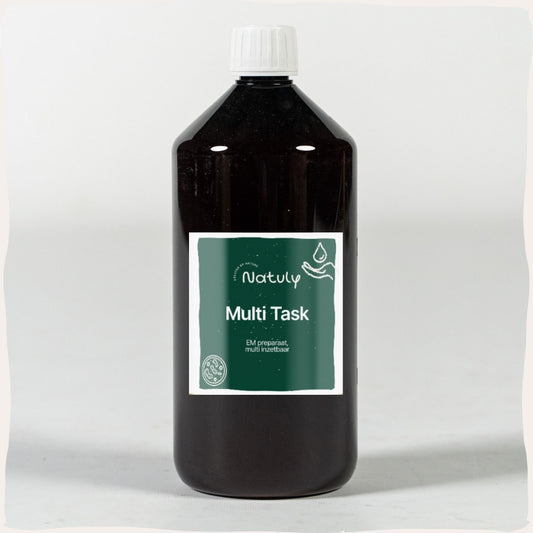
Multi task micro organism
Regular price From €18,76Regular priceUnit price per -
Lava gravel
Regular price From €6,00Regular priceUnit price per -
Seashell lime
Regular price From €6,00Regular priceUnit price per -
Clay minerals bentonite
Regular price From €7,01Regular priceUnit price per