What does a pig eat?
The pig is naturally an omnivore, a true all-eater. In the wild, their diet consists of a colorful mix of plants and animal material such as worms, insect larvae, and small prey. They forage, root, and actively search for food. And it is precisely this natural behavior that we want to preserve as much as possible, even when keeping pigs on the farm or in the pasture.
The power of a varied diet
In nature, pigs eat beech nuts, chestnuts, acorns, roots, tubers, leaves, herbs, and grasses, among other things. They love thistles, nettles, blackberries, and young tree sprouts. That sounds like a wild mix, and that's exactly the intention. Variety is crucial for good health, just as it is for humans.
Watch out for obesity and feed choice
Pigs are intelligent and selective eaters. They often go for the tastiest and most energy-rich snacks. Therefore, it is important to accustom them to less calorific feed such as hay or mature grass. Be sparing with young tender grass, fruit, tubers, or root vegetables: these contain many fast sugars.
Most vegetables are fine, but give cabbage varieties and alliums in moderation: they can disrupt digestion. Unsalted nuts and pieces of vegetables or fruit make excellent snacks. Feel free to pick some wild plants from nature such as nettle, dandelion, ground elder, but only if you know what to pick. Otherwise, sow a strip of pasture herbs to be able to pick these safely.
Grains and pellets
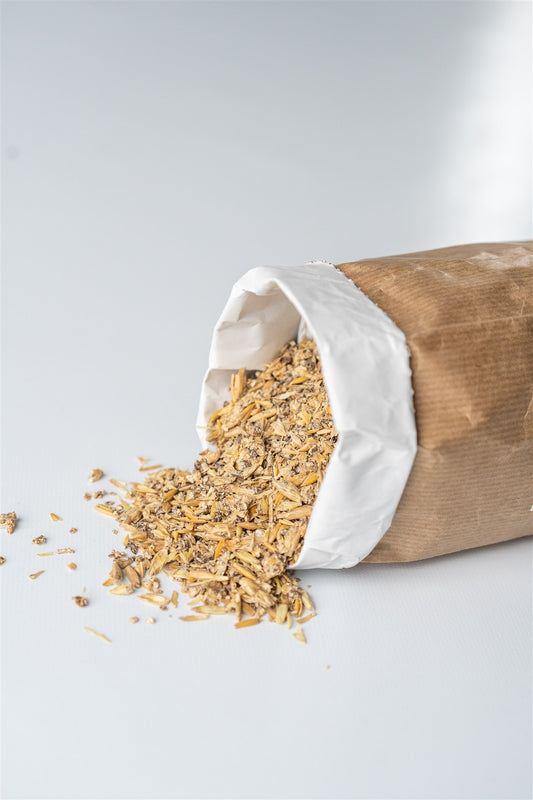
Our unprocessed grains, muesli, and lucerne pellets are also suitable for pigs. These feeds contain natural proteins, fatty acids, vitamins, and minerals, without synthetic additives. Depending on age, gender, living space, and season, you can supplement or reduce the ration.
Would you prefer a complete pellet alongside roughage? Our organic pig pellets are a complementary feed, specifically developed to meet the nutritional needs of pigs. (formerly known as Bio-Ron pig pellets).
General advice: feed growing pigs 1 to 2% of their body weight per day, and adult animals half to 1%. Animals living outdoors and being active may have a little more, especially in winter. For hobby animals, choose moderation over excess.
Natural supplements: bokashi, peat extract, and hemp
In addition to roughage and grains, we have developed various supplementary feeds rich in natural building blocks:
-
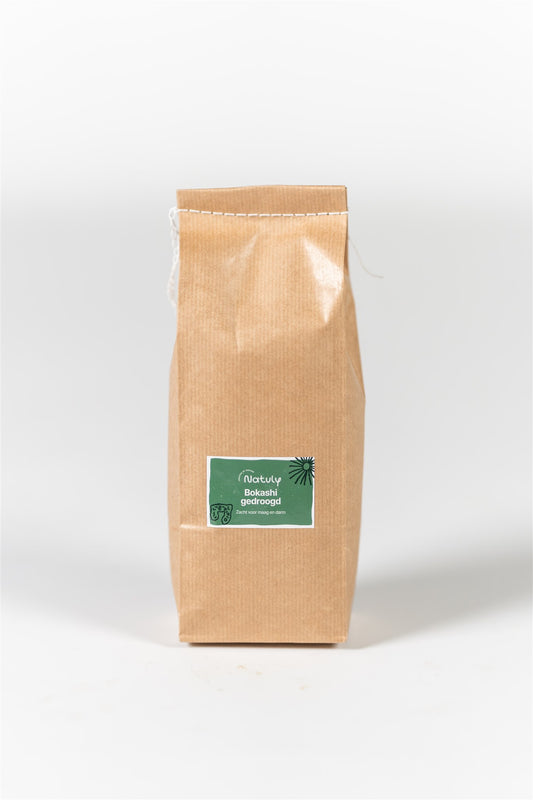
Bokashi: fermented supplementary food
-
Peat extract: plant-based peat mud
-
Bio-Chi: powerful boost based on oil cakes and herbs
-
Hemp Bites: 100% pressed hemp seed, with high-quality proteins and essential fatty acids
You can find all products for pigs at the bottom of the page.
Why no ‘complete feed’?
Most commercial feeds are aimed at rapid growth for the meat industry, where an animal goes from 0 to 100 kg in 6 months. Our vision is different: we feed animals that we want to keep healthy for the long term. No ‘complete feed’, but a varied menu tailored to your animal, the season, and the situation.
Our organic pig pellets are suitable as a supplement. For overweight hobby pigs, we recommend our pellet plus, which contains fewer calories but still a rich array of natural nutrients.
Unprocessed grains: how to feed them smartly
Pigs not accustomed to unprocessed grains may need to adjust. Build this up slowly. For example, feed a grain mixture as a slobber (soaked) once a week so they learn to take it in well. Absorption capacity is influenced by calm during feeding, so avoid feeding stress, especially in larger groups.
Housing: natural and safe
A healthy pig needs space, shelter, and activity. Provide a dry, draft-free stable with enough straw or sand to root in. Pigs love mud baths in the summer and enjoy rolling around, so give them the space and opportunities to display their natural behavior.
Prevent contact with wild boars and ensure sufficient fresh air. Also pay attention to safety in the design: sharp edges, slippery floors, or crushing hazards can cause a lot of stress and injury. Boredom is an underestimated risk: give them toys or roughage to keep them busy.
Water and hygiene
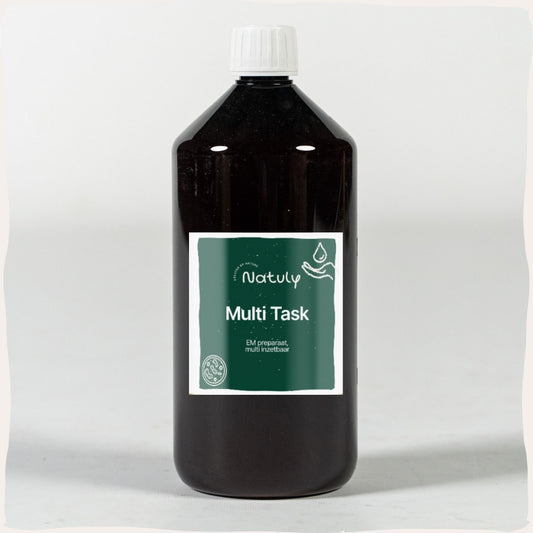
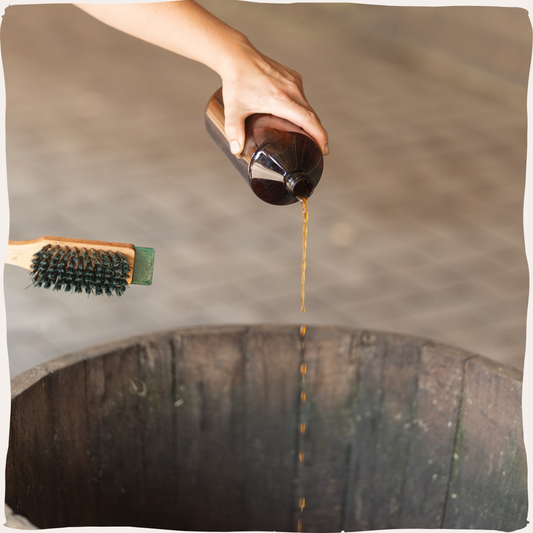
Pigs drink up to 10 to 15 liters of water per day. Always ensure clean, fresh water in a drinking trough that they cannot knock over. Regularly spray with Multi-Task to keep the microbial environment in stables and bedding healthy. Their skin, hooves, and drinking troughs can also be regularly cleaned with diluted Multi-Task.
Minerals: small substances with a big impact
As with other animals, minerals are essential for pigs for immunity, fertility, and development. Deficiencies or excesses often go unnoticed until things go wrong. Therefore, it is important to choose natural, balanced sources and monitor regularly.
Essential minerals in pigs
-
Iron: important for oxygen transport. Deficiency causes anemia and reduced immunity. Excess can promote bacterial growth.
-
Calcium & Phosphorus: needed for strong bones and good blood clotting. Imbalance can cause skeletal or muscle problems.
-
Copper: plays a role in oxygen transfer and fertility. Deficiency leads to anemia, excess is toxic.
-
Selenium: antioxidant that protects cell membranes. Deficiency causes muscle weakness, excess leads to hair loss and hoof problems.
-
Zinc: needed for skin, fertility, and immunity. Deficiency manifests as growth retardation and skin complaints.
-
Iodine: essential for thyroid function. Deficiency leads to weak piglets and metabolic problems.
Our vision: keeping pigs with respect for their nature
At Natuly (formerly Bio-Ron), we choose nutrition and care that aligns with the natural needs of the pig. This means:
-
Unprocessed ingredients, preferably organic
- Free intake of minerals via, for example, a mineral buffet
- Stimulating natural behavior through space, peace, and variety
Custom-made feed
Do you have multiple pigs or specific requirements? From 1000 kg, we are happy to create a custom feed composition. Feel free to contact us to inquire about the possibilities.