Soil Management
From barren land to a vibrant ecosystem full of biodiversity
Healthy soil is the foundation of everything that grows and thrives. Not only literally for the food that grows on it, but also figuratively: it determines the balance in the entire cycle. From soil life to plant, from plant to animal and eventually back again, for example through compost, to the soil.
Natural soil management is not about the highest yield, but about a healthy, resilient system that sustains itself. This requires a different way of thinking: not directing, but supporting. Not rushing, but guiding. And it works, not only in theory, but also in practice.
Back to balance
Soil that has been intensively fertilized and cultivated for years becomes imbalanced. Artificial fertilizer, slurry, heavy machinery: they break down what we actually need. Organic matter, humus, and most importantly: life. Because soil without life may produce mass, but not quality.
When switching to natural management, the soil will first have to reactivate. If you give it time and attention, you will see improvement within 3 to 5 years. Soils come back to life, plants can root again, and biodiversity visibly increases. Even heavily depleted soils prove surprisingly resilient.
The power of rest
In many cases, there are simply too many animals or too much cultivation on too little land. The soil doesn't get time to recover. A practical solution in a pasture is to work with a loop track or paddock paradise. This allows you to give parts of the land a rest, while the animals can still move freely. In the (vegetable) garden, this means: no digging, leaving leaves, and so on. You can read more about it here.
It is important to let plants, grasses, and herbs grow out. Fully grown grass means more structure, better root development, and more nutritious soil. What grows above ground also reflects what happens below. And that, in turn, supports soil life.
Restoration in cycles
Soil management is about supporting natural processes. Think in a cycle, not in loose input-output systems. What we remove in biomass, we must return in a natural way. Compost, solid manure, lava meal, clay minerals, and effective microorganisms help close the cycle.
Ensure a broad mix of natural fertilizers and soil improvers:
- Compost or bokashi from manure and organic material
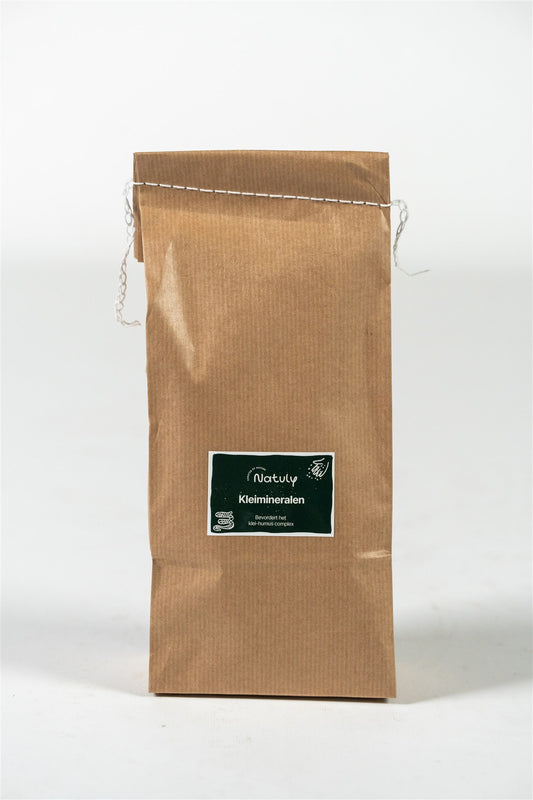
- Clay minerals – improve water management
- Rock flour such as Vulkamin, Eifel lava or Actimin
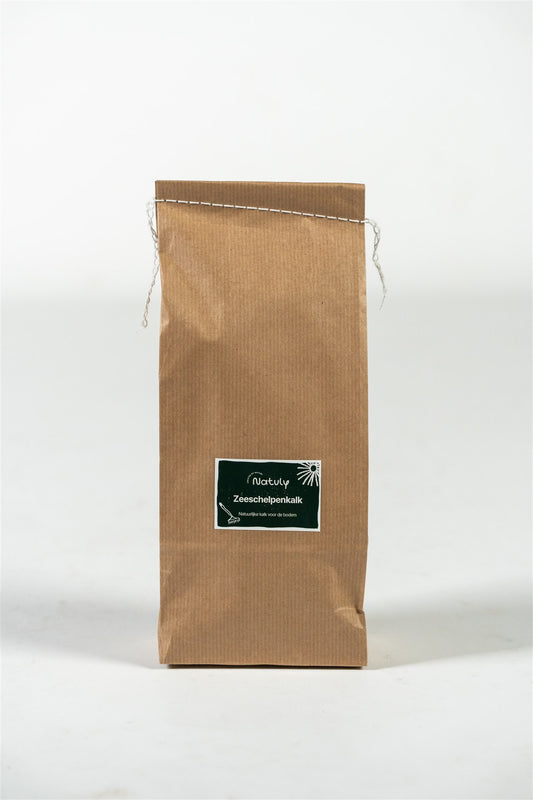
- Seashell lime – for low pH
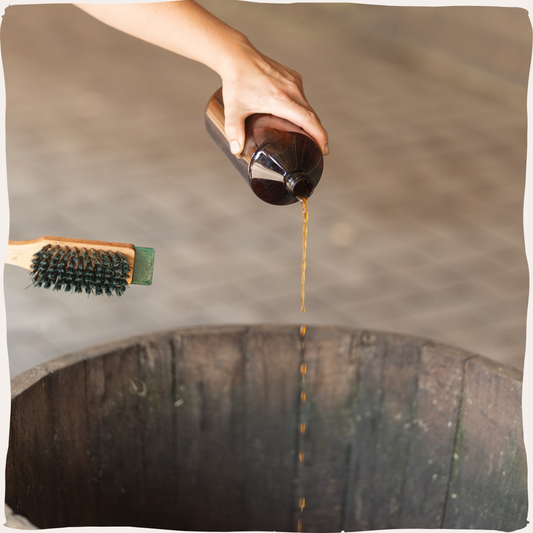
- Effective microorganisms – in stable, compost and on the land
Note: do not use slurry, artificial fertilizers or industrially processed pellets. These disrupt soil life, break down humus, and force grass growth. Quick results, but not very sustainable and low nutritional value.
Structure, humus and biodiversity
A naturally managed soil strives for balance. The soil gains structure, humus accumulates, and space for biodiversity is created. This diversity ensures that animals can choose for themselves. Selective eating is natural grazing behavior and essential for their health.
Therefore, let the grass grow fully, instead of continually grazing it short. This gives the grass a chance to mature. This also provides a nutritious environment underground: dead roots feed soil life, which in turn ensures new growth.
Sowing and maintenance
Preferably use organic seeds for plants, grass and herb mixtures. These are not bred for fast growth, but for quality and stability. Preferably sow in soil that has already been prepared with compost or other soil improvers. And certainly not unimportantly: let the grasses and herbs bloom. One seed becomes a hundred new seeds, which saves re-sowing.
Sowing grasses and herbs is best done in the spring or autumn. Overseeding on existing grasslands also works, especially if the sward is open and short (made). Keep in mind that this may need to be repeated several times, depending on the soil quality. What emerges depends on the quality of the soil. You can read more about it here.
Soil research: to measure is to know
Do you want to know exactly how your soil is doing? Various tests are available. Analyses are certainly not mandatory, but they can be a good starting point if you want a baseline measurement or don't know where to begin. But often the field itself tells enough: smell, color, the number of plant and insect species, and the growth of crops say a lot about the health of the soil. You just have to learn to look closely. You can read more about it here!
Humus: the invisible force
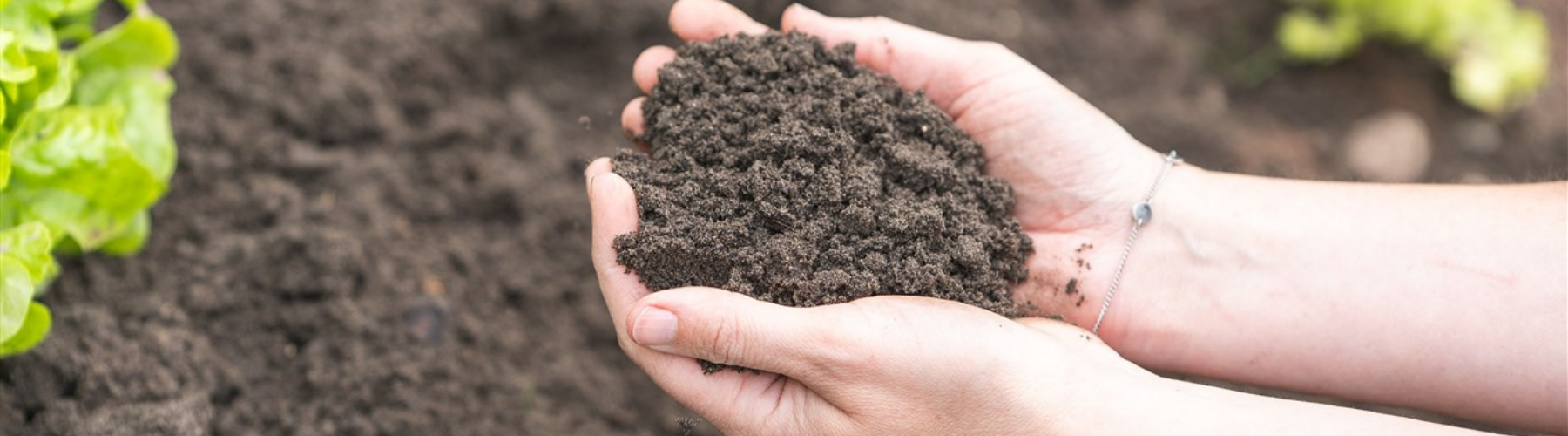
What exactly is humus? Humus is the top layer of the soil consisting of organic matter (dead plant and animal remains, excrement) that has been broken down by soil life. In healthy soil, the top layer is therefore darker in color than the underlying layers. The blacker the color, the higher the humus content often is.
The word humus is often used as a synonym for compost, but this is not entirely accurate. Compost is, after all, the result of a human-controlled decomposition process. Humus is actually the backbone of a living soil. Humus retains moisture, binds nutrients, protects against acidification, and ensures active soil life. And all this without being able to buy it in a bag.
A soil with sufficient humus:
- Can better withstand drought and abundant rain
- Supports strong grass and herb development
- Allows weeds to disappear naturally through balance
- Produces more nutritious and stable plants
No quick fix, but sustainable results
Natural soil management is not a matter of scattering or sowing once. It is an ongoing process in which you cooperate with nature. Give it time, observe and adjust where necessary. Each year brings new insights, each intervention can be re-evaluated. It is working together with the soil. That is teamwork, not a one-way street.
By moving with the natural rhythms and cycles, your land (pasture) will not only become more beautiful and biodiverse, but ultimately also more nutritious for you, your animals, and everything that lives on it.
Good soil is like a good relationship: you have to invest in it, but it pays off in spades.

Soil conditioners: the natural basis for healthy and fertile soil
Soil
-
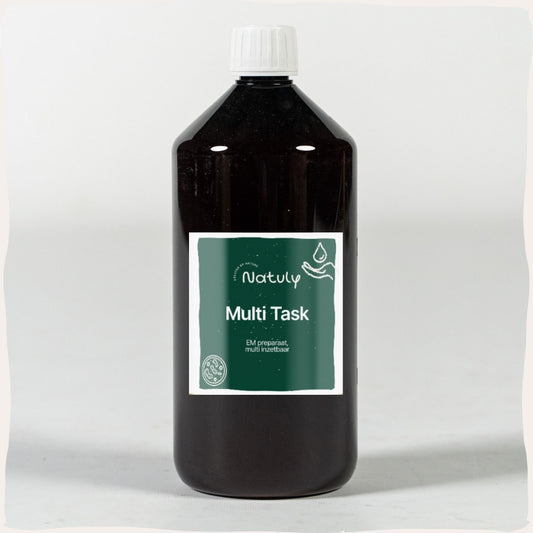
Multi task micro organism
Regular price From €18,76Regular priceUnit price per -
Lava gravel
Regular price From €6,00Regular priceUnit price per -
Seashell lime
Regular price From €6,00Regular priceUnit price per -
Clay minerals bentonite
Regular price From €7,01Regular priceUnit price per